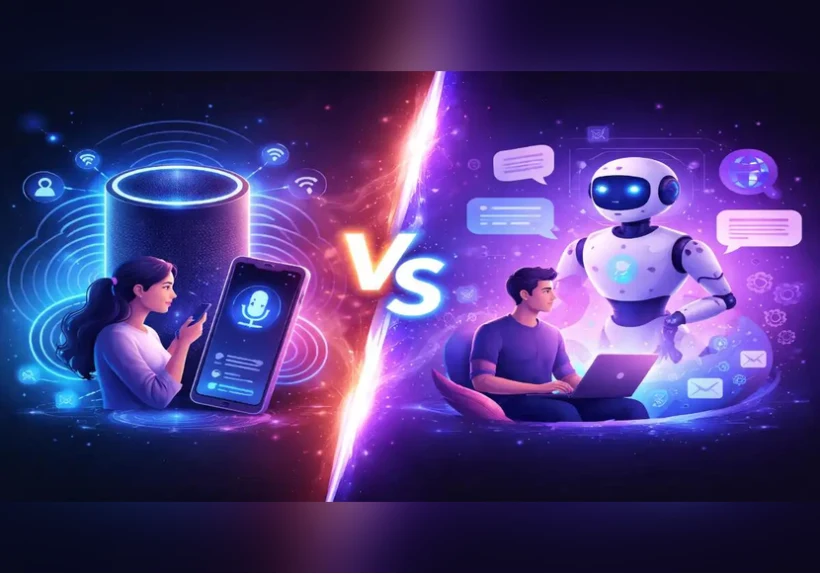
Customer communication has changed significantly. Businesses now receive inquiries through websites, messaging applications, social media and phone calls. Customers expect clear answers, convenient communication and assistance without unnecessary waiting.
This has made two technologies important for customer service: Voice AI agents and AI chatbots.
Both can automate customer interactions, but they work differently. Voice AI agents communicate through spoken conversations, while chatbots primarily interact through text messages. Each has different requirements, costs, strengths and limitations.
Choosing between Voice AI vs chatbots is not simply a technology decision. It depends on how customers contact your business, what type of assistance they need and which communication channel is most suitable for completing their requests.
This guide compares both technologies across seven important factors, explains their business applications and covers situations where using both can improve customer communication in 2026.
What Are Voice AI Agents?
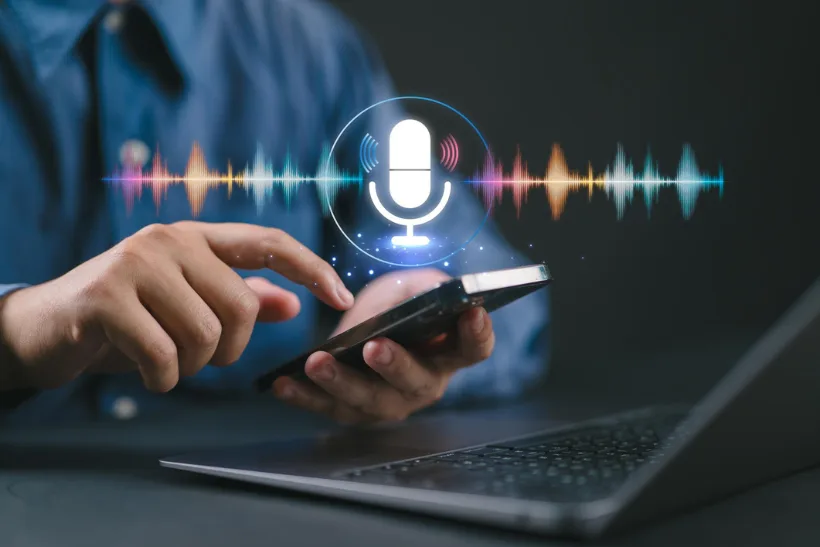
Voice AI agents are software systems that communicate with people through spoken language. They use technologies such as automatic speech recognition (ASR), natural language processing (NLP), language models and text-to-speech (TTS) to understand spoken requests and generate spoken responses.
Unlike traditional interactive voice response (IVR) systems, which usually depend on fixed menus and numbered options, modern Voice AI agents can understand natural speech and respond according to the conversation.
For example, a customer calling a software company might say:
“I cannot access my account after changing my password. Can someone help me?”
A Voice AI agent can process the request, identify the account access issue, ask relevant follow-up questions and provide the appropriate troubleshooting instructions.
Depending on its configuration and system permissions, it may also perform tasks such as:
- Answering frequently asked questions.
- Checking appointment information.
- Providing order or service updates.
- Routing calls to the appropriate department.
- Collecting customer details.
- Assisting with account-related requests.
- Transferring unresolved queries to human representatives.
How Voice AI Agents Work
A typical Voice AI interaction involves several steps:
- Speech recognition: The system converts the customer’s spoken words into text.
- Intent identification: It determines what the customer wants to accomplish.
- Information retrieval: It checks connected knowledge sources or authorized business systems.
- Response generation: It prepares an appropriate answer.
- Speech generation: Text-to-speech technology converts the response into spoken audio.
- Task execution: If configured, the system performs an authorized action or transfers the conversation to a human representative.
The quality of a Voice AI agent depends on speech recognition, background noise, language support, response latency, connected information sources and the accuracy of its configuration.
Voice AI is particularly useful when customers need to explain complicated issues, prefer speaking rather than typing or require assistance while performing another activity.
What Are Chatbots and How Do They Work?
Chatbots are software applications that communicate with customers through text-based conversations. They are commonly used on websites, mobile applications, WhatsApp and other messaging platforms.
Traditional chatbots rely on predefined rules, keywords and decision trees. When a customer selects an option or enters a recognized phrase, the chatbot provides the corresponding response.
Modern AI chatbots use natural language processing and large language models to understand questions written in different ways. Depending on their configuration, they can retrieve information, maintain conversation context and perform actions through connected systems.
For example, a customer messaging an online store might ask:
“Where is my order? I placed it two days ago.”
A chatbot connected to the store’s order management system can request an order number, retrieve the relevant information and provide an update.
Common Chatbot Features
Modern AI chatbots can support several business activities:
- Answering frequently asked questions.
- Collecting customer inquiries.
- Qualifying sales leads.
- Sharing product and service information.
- Sending relevant links and documents.
- Managing appointment requests.
- Providing order updates.
- Routing conversations to human representatives.
- Connecting with CRM and business applications.
WhatsApp Chatbots for Business Communication
WhatsApp chatbots are particularly useful for businesses that receive customer inquiries through WhatsApp.
Using the WhatsApp Business Platform and compatible chatbot software, companies can automate responses, manage incoming conversations and connect messaging workflows with business systems.
For example, a customer interested in a company’s software can send a WhatsApp message asking about available subscription plans.
The chatbot can provide relevant plan information, ask about the customer’s requirements and direct the conversation to a sales representative when additional assistance is needed.
Unlike voice interactions, text conversations also allow customers to review previous answers, open shared links and read product information whenever they need it.
In simple terms: Voice AI communicates through spoken conversations, while chatbots communicate primarily through written messages. Both can use AI to understand customer requests and automate business tasks.
Voice AI vs Chatbots: The Real Comparison
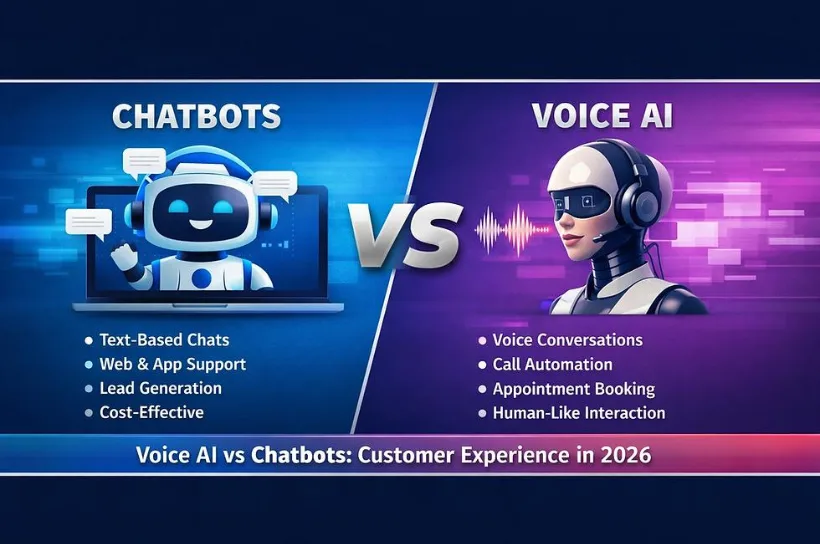
Voice AI and chatbots can handle customer inquiries, but their performance depends on the communication channel, complexity of the request and business requirements.
Here is a detailed comparison across seven important areas.
1. User Experience and Customer Engagement
Voice AI and chatbots provide different customer experiences.
Voice AI provides spoken interaction.
Some customers prefer explaining their problems verbally rather than typing long messages. Voice AI allows them to describe an issue naturally and receive spoken responses.
For example, someone contacting an insurance company about a complicated claim may find it easier to explain the situation through a conversation.
Voice AI can also identify information from spoken language, including pauses, corrections and changes in the customer’s request. However, detecting emotional tone does not guarantee that the system correctly understands how a person feels.
Chatbots provide convenient text communication.
Customers can send messages whenever convenient, read responses at their own pace and review previous information.
For example, someone comparing software subscription plans can ask multiple questions, review the answers and share the information with colleagues before making a decision.
Chatbots are also suitable when customers need written instructions, product links, documents or screenshots.
When both are used: A customer can begin with a chatbot and move to a voice conversation when the issue requires a longer explanation.
Verdict: Voice AI is suitable for spoken interactions and detailed explanations. Chatbots are suitable for convenient messaging and written information.
2. Response Speed and Task Completion
Response speed is important when customers need assistance with routine requests.
However, the time required to resolve a problem depends on the complexity of the request and the systems connected to the AI solution.
Chatbots handle many routine requests efficiently.
For example, a customer asking about business hours or product availability may receive an immediate automated response.
A chatbot connected to the relevant business system can also retrieve information without requiring a representative to search manually.
Voice AI handles spoken requests without requiring typing.
A customer can explain a problem in one conversation instead of navigating several website pages or entering information into multiple forms.
For example, a customer calling a service provider can explain a scheduling problem and ask the Voice AI agent to check available appointment options.
When both are used: A chatbot can collect basic details before transferring the customer to a voice agent or human representative.
The actual response and resolution time should be measured through real customer interactions rather than assumed performance percentages.
Verdict: Chatbots are suitable for quick written requests and routine information. Voice AI is useful for spoken requests that require back-and-forth discussion.
3. Accuracy and Understanding
Accuracy is one of the most important factors when comparing AI voice agents and chatbots.
Both technologies can misunderstand customer requests, but the reasons are different.
Voice AI faces speech-related challenges.
Speech recognition systems must process spoken language before generating a response.
Background noise, poor microphone quality, accents, pronunciation differences and interruptions can affect transcription accuracy.
For example, a customer providing an order number over a noisy phone connection may need to repeat the information.
Modern speech recognition systems can handle many languages and speaking styles, but their performance depends on the model, audio quality and language configuration.
Chatbots face text interpretation challenges.
A chatbot may receive messages containing spelling mistakes, abbreviations, incomplete sentences or multiple questions.
For example:
“Can I change my plan and add two users?”
The chatbot must understand that the customer is asking about two separate account changes.
AI-powered chatbots can interpret natural language, but incorrect or incomplete knowledge sources may still produce inaccurate responses.
When both are used: Businesses can maintain written conversation records and use voice calls for issues that need additional clarification.
Verdict: Chatbots avoid audio transcription problems, while Voice AI can understand spoken requests. Neither is automatically more accurate in every situation.
4. Handling Customer Volume
Businesses need to consider how many customer interactions their systems can handle simultaneously.
Chatbots support large volumes of messaging conversations.
A cloud-based chatbot can manage multiple text conversations simultaneously, depending on platform limits, infrastructure and service capacity.
For example, an e-commerce company receiving questions about delivery, returns and product availability can use a chatbot to handle routine inquiries across its messaging channels.
This reduces the need for representatives to answer every repetitive question individually.
Voice AI requires additional audio infrastructure.
Voice AI systems must process incoming audio, generate responses and maintain an active voice connection.
Their capacity depends on telephony infrastructure, speech processing resources, concurrency limits and provider pricing.
Businesses must check how many simultaneous calls their selected system supports.
When both are used: Chatbots can handle routine messaging, while Voice AI can handle customers who prefer phone-based assistance.
Verdict: Chatbots are generally easier to scale across high-volume text conversations. Voice AI capacity depends more heavily on call infrastructure and processing requirements.
5. Personalization and Customer Context
Customers expect businesses to understand their requirements rather than repeatedly asking for the same information.
Both technologies can provide personalized assistance when connected to reliable customer data.
Voice AI can personalize spoken conversations.
A Voice AI agent connected to a CRM may access permitted customer information, such as previous service requests, account details and appointment records.
For example, when an existing customer calls a service provider, the system may identify the reason for the previous inquiry and continue the conversation using available records.
Chatbots can personalize written conversations.
A chatbot can use customer information and previous interactions to provide relevant responses.
For example, an existing software customer asking about a subscription upgrade may receive information related to their current plan and available options.
When both are used: Shared customer records and conversation history can help maintain context when a customer moves from messaging to a voice call.
Verdict: Both technologies can provide personalized customer support. The quality of personalization depends on data access, permissions and integration quality.
6. Cost and Implementation
The cost of Voice AI and chatbot software depends on the features, usage, infrastructure and integrations required by a business.
Voice AI generally requires more specialized infrastructure.
Implementation may involve:
- Speech recognition services.
- Text-to-speech technology.
- Telephony or calling infrastructure.
- AI model usage.
- CRM and business system integrations.
- Call recording and storage, where applicable.
- Testing and ongoing monitoring.
Some providers charge based on call duration, connected minutes or processing usage. Additional telephony charges may also apply.
Chatbots can be less expensive for basic messaging workflows.
A simple rule-based chatbot may require only a limited setup.
More advanced AI chatbots can involve additional costs for language model usage, knowledge retrieval, integrations and conversation volume.
WhatsApp chatbot deployments may also involve applicable WhatsApp Business Platform charges, depending on the message category, market and current pricing structure.
Cost comparison:
| Cost Factor | Voice AI | Chatbots |
| Initial setup | Often more complex | Varies by chatbot type |
| Communication infrastructure | Telephony and audio processing | Messaging platform or website integration |
| AI processing | Speech and language processing | Text and language processing |
| Usage charges | May depend on call duration and processing | May depend on messages, conversations or AI usage |
| Maintenance | Voice testing and system monitoring | Knowledge and conversation flow updates |
| Integration | Calling systems and CRM | Website, WhatsApp and CRM |
Businesses should compare the total cost of ownership rather than choosing a solution based only on its monthly subscription price.
Verdict: Basic chatbots are often easier to implement with lower initial infrastructure requirements. Voice AI may require additional investment for telephony and speech processing.
7. Integration and Technical Requirements
Integration determines how effectively an AI solution works with existing business systems.
Voice AI integrations
Voice AI systems may need connections with:
- Cloud telephony platforms.
- CRM software.
- Contact centre applications.
- Appointment scheduling systems.
- Customer databases.
- Payment and account management systems.
These connections allow voice agents to retrieve information and perform authorized actions during calls.
Chatbot integrations
Chatbots can connect with:
- Business websites.
- WhatsApp Business Platform.
- CRM software.
- E-commerce platforms.
- Lead management systems.
- Customer support applications.
- Payment and notification systems.
For example, a WhatsApp chatbot connected to a CRM can collect lead details and pass them to the sales team.
The exact integration options depend on the chatbot provider, available APIs and the business systems being used.
When both are used: Shared CRM records and integration workflows can help maintain customer information across messaging and calling channels.
Verdict: Chatbots are generally easier to add to websites and messaging channels. Voice AI requires additional calling and audio infrastructure.
When to Use Voice AI vs Chatbots
Choosing between Voice AI and chatbots depends on customer preferences, communication requirements, available resources and the type of requests your business receives.
Neither technology is suitable for every situation.
Use Voice AI When:
Voice AI is a suitable option when:
- Customers need to explain complicated issues verbally.
- Your business receives a high volume of incoming phone calls.
- Customers prefer speaking rather than typing.
- Requests involve multiple questions and follow-up discussions.
- You need automated call routing and appointment assistance.
- Your business operates a contact centre or telephone support service.
- Customers require hands-free communication.
Example:
A property management company receives calls about maintenance problems. A Voice AI agent can collect the property details, understand the reported issue, create a service request through an authorized system and transfer urgent matters to a human representative according to configured rules.
Use Chatbots When:
Chatbots are a suitable option when:
- Customers frequently ask repetitive questions.
- Your business receives inquiries through websites or WhatsApp.
- Customers need written information and reference links.
- You want to collect lead details automatically.
- Customers need product or service information.
- You need automated responses outside normal business hours.
- You want to manage several text conversations simultaneously.
Example:
A SaaS company receives website inquiries about subscription plans. A chatbot can explain the available plans, ask about the customer’s requirements, collect contact details and direct qualified prospects to the sales team.
Use Both When:
Combining Voice AI and chatbots can be useful when:
- Customers contact your business through messaging and phone calls.
- Different customer requests require different communication methods.
- You need both written and spoken support.
- Customer records must remain accessible across channels.
- You want to route complex requests to human representatives.
- Your support team manages inquiries from different communication channels.
Example:
An online education company uses a WhatsApp chatbot to answer course-related questions and collect student inquiries. Students who need detailed counselling can request a phone conversation with a representative or a supported Voice AI system.
This allows customers to choose a communication method according to their requirements.
Voice AI vs Chatbots for Different Industries
The right technology also depends on the type of business and the questions customers usually ask.
Here are practical examples across different industries.
| Industry | Voice AI Use Case | Chatbot Use Case |
| SaaS | Product inquiries through phone calls | Lead qualification and feature information |
| Healthcare | Appointment-related phone assistance | Clinic information and appointment requests |
| E-commerce | Spoken order and delivery inquiries | Order updates, product questions and returns |
| Banking | Call routing and account-related assistance | Transaction information and common FAQs |
| Education | Admission inquiry calls | Course information and student lead collection |
| Real Estate | Property inquiry calls | Property details and site visit requests |
| Travel | Booking-related phone assistance | Reservation information and travel updates |
| Telecommunications | Technical support calls | Plan information and service requests |
These are examples rather than guaranteed capabilities. Actual tasks depend on system integration, customer verification, business policies and applicable regulations.
How to Choose the Right AI Customer Support Solution
Before purchasing Voice AI or chatbot software, assess your existing customer communication process.
The following questions can help you make a practical decision.
1. Which Communication Channel Do Your Customers Prefer?
Review where your customers usually contact your business.
If most inquiries arrive through WhatsApp or your website, a chatbot may be the more suitable option.
If your business receives frequent phone inquiries, Voice AI may provide greater value.
2. What Type of Questions Do Customers Ask?
Identify the most common customer requests.
For example:
- Basic product questions may be handled through chatbots.
- Account-related phone inquiries may require Voice AI.
- Complicated technical problems may need human assistance.
- Appointment requests may be managed through either channel, depending on integration.
3. What Is Your Current Support Budget?
Calculate the total implementation and operating costs.
Include software subscriptions, messaging charges, calling costs, AI usage, integrations, training and ongoing maintenance.
4. Does the Solution Integrate With Existing Systems?
Check whether the selected solution connects with your CRM, website, messaging platforms and customer databases.
An AI system that cannot access the information required to answer customer questions may provide limited value.
5. Can Customers Reach a Human Representative?
Automation should not prevent customers from receiving human assistance.
Make sure the system can transfer conversations, preserve relevant information and provide a clear support option when the AI cannot resolve an issue.
6. How Will You Measure Performance?
Define measurable performance indicators before deployment.
For chatbots, track:
- First response time.
- Lead qualification rate.
- Chat completion rate.
- Customer satisfaction.
- Human handoff rate.
- Successful resolution rate.
For Voice AI, track:
- Call completion rate.
- Speech recognition errors.
- Average call duration.
- Successful resolution rate.
- Call transfer rate.
- Customer satisfaction.
These metrics provide a better basis for evaluating the technology than relying on general performance claims.
The Right Approach: Combining Voice AI and Chatbots
For many businesses, choosing one technology does not mean the other should be excluded.
Voice AI and chatbots can perform different tasks within the same customer service process.
A combined setup can work as follows:
Step 1: Customer Initiates a Conversation
A customer contacts the business through WhatsApp, a website chatbot or a phone number.
Step 2: Chatbot Handles Initial Communication
The chatbot identifies the customer’s requirements, answers common questions and collects relevant details.
Step 3: Complex Requests Are Identified
If the customer needs detailed assistance, the system identifies whether the request requires a human representative or a voice-based conversation.
Step 4: Voice AI or Human Support Takes Over
The customer can be connected to a suitable voice support system or human representative, depending on the available setup.
Step 5: Customer Information Is Maintained
Connected CRM and communication systems can maintain relevant customer details and interaction records.
Example of a Combined Customer Support Workflow
| Customer Requirement | Suitable Technology |
| Product information | Chatbot |
| Frequently asked questions | Chatbot |
| Lead collection | Chatbot |
| Appointment booking | Chatbot or Voice AI |
| Complex spoken inquiries | Voice AI |
| Detailed technical support | Voice AI or human representative |
| Customer complaints | Chatbot with human escalation |
| Follow-up notifications | Messaging automation |
The main advantage of this approach is that customers can use the communication method that suits their requirements.
However, businesses should not introduce both technologies without a clear purpose. The implementation should solve actual communication problems and justify its operating costs.
The key difference: Chatbots manage written conversations, while Voice AI manages spoken interactions. A combined setup can support customers across both channels when the necessary integrations are available.
How WatConnect Supports AI-Powered WhatsApp Communication
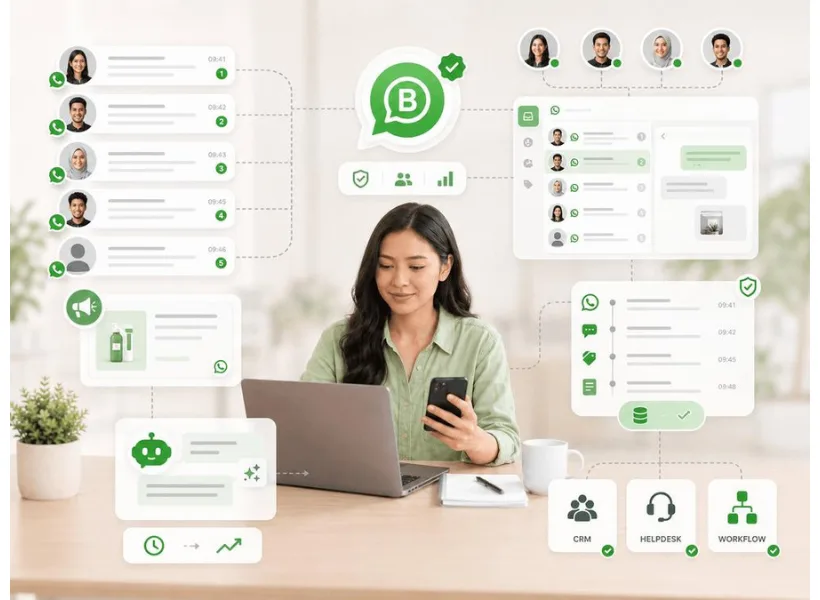
Businesses looking for an AI chatbot for customer support often need more than an automated greeting. They need a way to answer inquiries, collect customer information, manage conversations and connect messaging activities with existing business workflows.
WatConnect provides WhatsApp marketing and automation features that support these requirements.
Although Voice AI and WhatsApp chatbots serve different communication purposes, WatConnect’s listed capabilities focus on WhatsApp-based messaging, chatbot automation and customer communication.
Here are some relevant capabilities.
1. AI-Powered WhatsApp Chatbots
WatConnect supports AI-powered WhatsApp chatbot automation for handling customer queries and collecting lead information.
Businesses can use chatbot workflows to answer common questions, provide product information and manage initial customer inquiries.
This is useful for companies receiving repeated questions through WhatsApp.
2. Automated Customer Notifications
Businesses often need to send notifications related to orders, forms, customer requests and other business activities.
WatConnect supports automated WhatsApp notifications that can be triggered through configured workflows.
These notifications help businesses keep customers informed without requiring representatives to send every update manually.
3. Team Inbox for Customer Conversations
When multiple employees handle customer inquiries, managing conversations individually can become difficult.
WatConnect provides team conversation management features that help businesses coordinate WhatsApp communication.
This can support sales and customer service teams that need to manage inquiries through a shared system.
4. WhatsApp Message Template Management
The WhatsApp Business Platform requires approved templates for applicable business-initiated messages.
WatConnect provides template management features that help businesses manage and use WhatsApp message templates.
Companies can organize templates for relevant customer notifications and messaging campaigns.
5. Bulk WhatsApp Messaging
Businesses can use WhatsApp bulk messaging for permitted marketing communication with customers who have provided the required permission.
WatConnect supports template-based bulk WhatsApp messaging, allowing businesses to manage messaging campaigns through its platform.
6. API Integration for Business Workflows
WatConnect provides API integration capabilities that can connect WhatsApp messaging with business applications and automated workflows.
For example, a business can configure a workflow to send a WhatsApp notification when a customer submits a form or completes a relevant action.
Which Solution Should Your Business Choose?
If your main requirement is automated phone conversations, you should evaluate a dedicated Voice AI solution with suitable telephony and speech processing capabilities.
If your requirement is WhatsApp customer communication, automated responses, lead collection, messaging campaigns and team conversation management, WatConnect provides relevant features for these activities.
You can review the WatConnect WhatsApp Marketing and Automation Platform to understand its available features and communication solutions.
Frequently Asked Questions
1. What is the difference between Voice AI and chatbots?
Voice AI communicates with customers through spoken conversations, while chatbots primarily communicate through text messages. Voice AI uses speech recognition and speech generation technologies, whereas chatbots process written messages and generate text responses. Both can use AI to understand customer requests and automate tasks.
2. Is Voice AI better than chatbots?
Neither technology is better for every business. Voice AI is suitable for spoken conversations, detailed explanations and phone-based support. Chatbots are suitable for FAQs, lead collection, written product information and messaging automation. The right choice depends on customer preferences and business requirements.
3. Are AI chatbots cheaper than Voice AI agents?
Basic chatbots are often less expensive to implement because they do not require telephony and audio processing infrastructure. Voice AI systems may involve additional charges for speech recognition, voice generation, calling infrastructure and connected services. Actual costs depend on the provider and usage.
4. Can Voice AI and chatbots work together?
Yes. Businesses can connect chatbots and Voice AI through shared customer records, CRM integrations and communication workflows. For example, a chatbot can collect customer details before transferring a complex inquiry to a voice agent or human representative.
5. Which is better for customer support: Voice AI or chatbots?
Chatbots are useful for written customer support, common questions and automated messaging. Voice AI is useful when customers prefer speaking or need help explaining complicated issues. Businesses with both messaging and phone support requirements may benefit from using both technologies.
6. Can chatbots understand natural language?
Yes. AI-powered chatbots can use natural language processing and language models to understand customer questions written in different ways. Their accuracy depends on model quality, available information, instructions and integration with business systems.
7. Can Voice AI handle multiple languages?
Many modern Voice AI systems support multiple languages. However, language availability and accuracy vary by provider, speech recognition model and voice generation technology. Businesses should test the languages and regional accents used by their customers before implementation.
8. Can WhatsApp chatbots replace human customer support agents?
WhatsApp chatbots can handle common questions, collect information and automate repetitive communication. However, complicated complaints, sensitive requests and situations requiring human judgment should be transferred to trained representatives. Chatbots are generally more useful when they work alongside human support teams.
9. Is WhatsApp suitable for AI chatbot automation in 2026?
Yes. The WhatsApp Business Platform supports business messaging, integrations and automated communication. Businesses can use compatible chatbot solutions to manage customer inquiries, lead collection and notifications, subject to WhatsApp’s applicable policies and technical requirements.
10. Does WhatsApp support voice calling for businesses?
Yes. Meta’s WhatsApp Business Platform documentation includes calling capabilities that allow supported businesses to make and receive WhatsApp calls. However, WhatsApp calling and Voice AI are different technologies. Using WhatsApp calling does not automatically provide an AI-powered voice agent.
11. What should businesses consider before choosing an AI chatbot?
Businesses should consider chatbot accuracy, supported languages, integration options, customer data security, messaging costs, automation capabilities and human handoff options. The chatbot should also provide information based on reliable business content.
12. How does WatConnect help businesses with AI chatbots?
WatConnect provides WhatsApp chatbot automation, automated customer notifications, team conversation management, message template management, bulk messaging and API integrations. These features help businesses organize WhatsApp communication and manage customer inquiries through automated workflows.
Conclusion
Voice AI and chatbots both help businesses manage customer communication, but their applications are different.
Voice AI is suitable for spoken interactions, phone-based assistance and requests that require detailed verbal explanations. Chatbots are suitable for written communication, frequently asked questions, lead collection and automated messaging.
The right technology depends on the communication channels your customers use, the type of support they need and the systems your business already operates.
Businesses that receive inquiries through WhatsApp can use chatbot automation to manage customer questions, organize conversations and send relevant notifications. Those with substantial phone support requirements can evaluate Voice AI alongside their existing customer service systems.
For WhatsApp-focused communication, WatConnect provides chatbot automation, messaging, team inbox management and API integration features that help businesses manage customer interactions through WhatsApp.
A suitable implementation should make communication easier for customers while allowing employees to focus on requests that require personal assistance.