

Small businesses require communication methods that are cost-efficient and easy to manage. WhatsApp marketing is used as a direct messaging channel to communicate with customers, manage queries, and send updates. This article explains the benefits of WhatsApp marketing for small businesses and how it supports communication, engagement, and operational processes.
WhatsApp is widely used, which makes it a practical platform for business communication. It allows businesses to send messages, respond to queries, and maintain continuous interaction without complex systems.
For a basic understanding, refer to this WhatsApp marketing guide for businesses.
What is WhatsApp Marketing for Small Businesses?
WhatsApp marketing for small businesses refers to the use of WhatsApp to send messages, handle customer communication, and manage updates. Small businesses use it for customer support, promotions, and order-related communication.
It supports direct messaging, which allows businesses to communicate without intermediaries. This improves clarity and reduces delays in communication.
1. Direct Customer Communication

One of the main benefits of WhatsApp marketing for small businesses is direct communication. Messages are sent directly to customers, which supports faster interaction.
Customers can reply instantly, and businesses can handle queries in real time. This reduces waiting time and improves communication flow.
2. Higher Message Visibility and Engagement
WhatsApp messages are usually viewed shortly after delivery. This increases the chances of communication being noticed compared to other channels.
Higher visibility supports better engagement. Customers are more likely to respond to messages that are received through familiar messaging platforms.
3. Cost-Effective Communication Channel
Small businesses often operate with limited budgets. WhatsApp marketing reduces the need for multiple communication tools.
Messages can be sent without high costs, and communication can be managed within a single platform. This supports cost control and efficient resource usage.
Supports Real-Time Customer Support
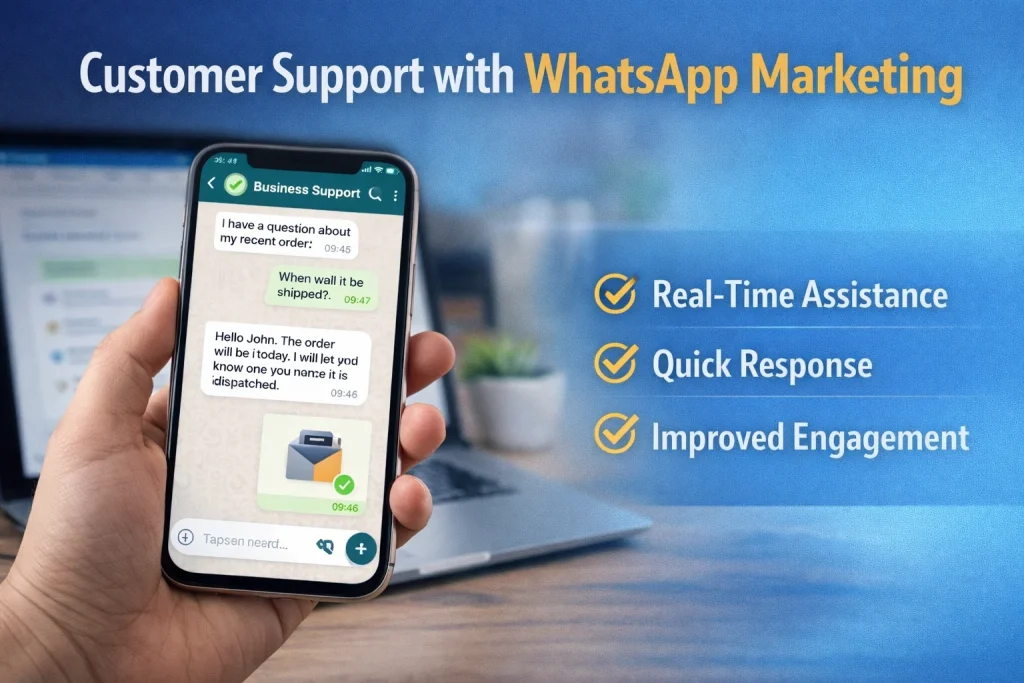
WhatsApp allows businesses to provide real-time customer support. Queries can be handled as they are received, which improves response time.
Quick replies and automated responses can be used to manage frequent queries. This supports continuous communication without delays.
5. Easy to Use and Manage
WhatsApp does not require complex setup. Small businesses can start communication using simple tools and basic configuration.
The interface is familiar to most users, which reduces the need for training. This makes it suitable for businesses with limited technical resources.
6. Automation for Repetitive Tasks
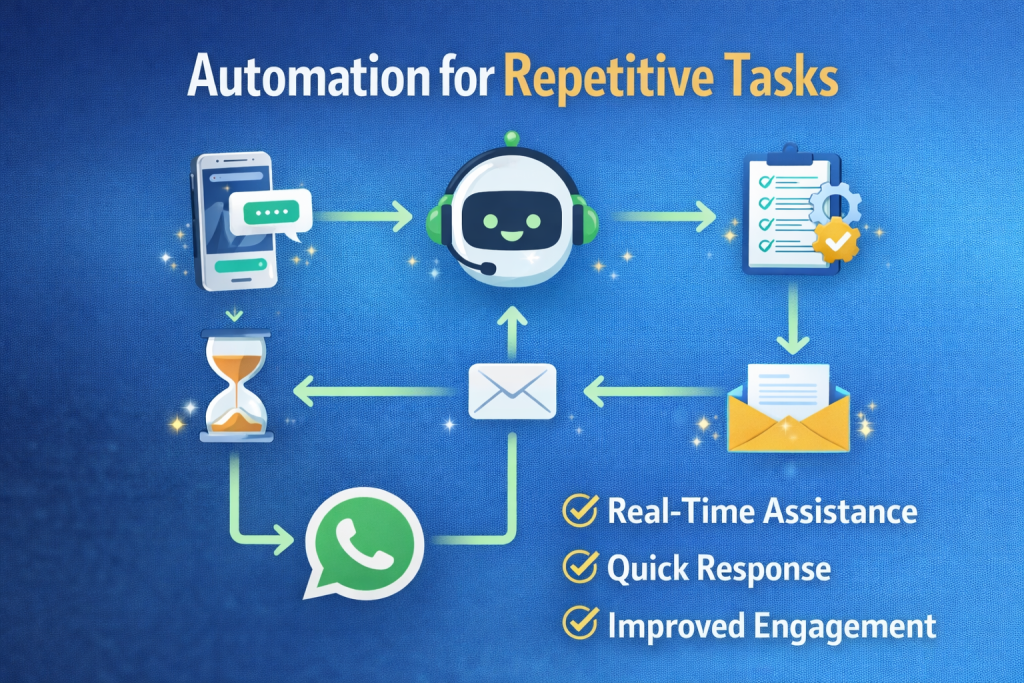
Automation helps in handling repetitive communication tasks. Chatbots can respond to common queries and manage initial interactions.
This reduces manual workload and supports consistent communication. Automation tools also help in managing follow-ups and scheduled messages.
Businesses can follow a structured approach on how to use WhatsApp for business growth.
WatConnect provides automation, chatbot workflows, and messaging tools that support structured communication for small businesses.
7. Improved Customer Relationship Management
WhatsApp supports continuous communication, which helps in maintaining customer relationships. Businesses can send updates, reminders, and follow-up messages.
Regular interaction helps in maintaining connection with customers. This supports long-term communication and repeat engagement.
8. Supports Sales and Order Management

Small businesses use WhatsApp for managing sales and orders. Product details can be shared directly in chats, and customers can confirm orders through messages.
Order updates and confirmations can also be managed within the same platform. This simplifies the sales process and reduces communication gaps.
9. Integration with Business Tools
WhatsApp can be integrated with CRM systems and other business tools using API. This supports centralized communication and data management.
Integration allows businesses to manage contacts, track conversations, and automate workflows within connected systems.
10. Suitable for Multiple Use Cases
WhatsApp marketing supports different communication needs. It can be used for customer support, promotions, reminders, and updates.
This flexibility allows small businesses to manage multiple processes within a single communication platform.
Best Practices for Small Businesses
Small businesses should follow consent-based communication before sending messages. This improves response quality and ensures compliance.
Messages should remain relevant and structured. Frequency control is important to maintain engagement. Automation tools can be used to manage communication efficiently.
FAQs
Q1. What are the benefits of WhatsApp marketing for small businesses?
It provides direct communication, higher engagement, cost efficiency, and real-time support.
Q2. Is WhatsApp marketing suitable for small businesses?
Yes, it is easy to use, cost-effective, and supports multiple communication needs.
Q3. Can small businesses automate WhatsApp marketing?
Yes, automation tools and chatbots can manage communication and workflows.
Q4. How does WhatsApp help in customer engagement?
It allows direct messaging, faster responses, and continuous interaction.
Q5. Can WhatsApp be used for sales?
Yes, businesses can share product details, manage orders, and communicate with customers.
Conclusion
The benefits of WhatsApp marketing for small businesses include direct communication, cost efficiency, automation, and structured messaging. Businesses use WhatsApp to manage communication, support customer interaction, and handle operational processes within a single platform.
A comparison of WhatsApp vs email marketing for business helps in selecting the right communication channel. ise third blog se link karna hai
CTA: Manage communication and automation using WatConnect to support business operations and messaging workflows.